

You don’t lose your power in one dramatic moment.
You lose it in:
- the “it’s fine” you didn’t mean,
- the apology you didn’t owe,
- the late-night reply you didn’t want to send,
- the disrespect you swallowed… again.
If your life feels like this:
- people walk over your time and energy,
- you’re always the one adjusting, apologizing, over-giving,
- you feel resentful but still can’t say “no”…
Then you’re not just tired — you’re quietly abandoning yourself.
This post will show you 12 signs you’re giving your power away and what to do about it.
At the end, I’ll give you a way to measure your self-respect with a 10-minute scorecard so you know exactly where you stand.
What Does “Giving Your Power Away” Actually Mean?
It’s not about dominating others or becoming “alpha.”
Giving your power away means:
- You let other people decide how you feel.
- You ignore your own standards to avoid discomfort.
- You treat everyone else’s needs as urgent and your own as optional.
Power = your attention, time, emotional energy, and self-respect.
Every time you betray yourself to keep the peace, you pay with those four.
Let’s get brutally honest.
12 Signs You’ve Quietly Given Your Power Away
Use this as a mirror, not a weapon. If a sign punches you in the gut, good — that’s where your work starts.
1. You Say “Yes” When Your Whole Body Is Screaming “No”
You agree because:
- You don’t want to look difficult,
- You fear conflict,
- You’re scared they’ll be upset with you.
So you say yes to:
- Favors you don’t have energy for,
- “Quick calls” that eat your evening,
- Events that drain you for days.
What this costs you:
Resentment. Exhaustion. The belief that your needs are less important than everyone else’s.
Power shift:
Before answering, ask:
“If I respected myself fully, would I still say yes to this?”
If the answer is no, your mouth should not say yes.
Click here - Take your power back in 10 minutes
2. You Over-Explain Your Decisions Like You’re on Trial
You can’t just say:
- “No, I won’t make it.”
- “I don’t want to do that.”
- “I’m not available.”
You add:
- long backstories,
- “I’m so sorry,”
- “I know it sounds selfish but…”
What this costs you:
You teach people that your decisions are negotiable. You act like a child asking permission, not an adult making a choice.
Power shift:
Practice short, clean sentences:
- “I won’t be able to make it.”
- “No, that doesn’t work for me.”
- “I’m not taking that on.”
No justification. No essay.
3. You Apologize for Existing
Your default vocabulary:
- “Sorry, can I ask something?”
- “Sorry, just one more question.”
- “Sorry for taking up your time.”
Even when you’ve done nothing wrong.
What this costs you:
You position yourself as smaller, less convenient, and less deserving of space.
Power shift:
Swap “sorry” with “thank you”:
- “Thanks for waiting.”
- “Thanks for your time.”
- “Thanks for your patience.”
Apologize for harm, not for existing.
Click here - The 7 signs someone doesn't respect you
4. You Tolerate Disrespectful Tone as Long as They “Didn’t Mean It”
You explain away:
- raised voices,
- sarcasm that stings,
- jokes at your expense,
- “That’s just how they are.”
You tolerate it as long as they sometimes show you affection.
What this costs you:
You train your nervous system to accept disrespect as normal. You lose trust in yourself because you keep ignoring your own discomfort.
Power shift:
One simple rule:
“I don’t stay in conversations where I’m being disrespected.”
That can sound like:
- “I’m not okay with this tone. I’ll come back when we’re calm.”
- Then actually leave — no debate.
5. You Chase People Who Give You Bare Minimum Effort
You:
- double-text,
- keep reaching out,
- justify their inconsistency,
- romanticize “potential.”
They:
- reply when it suits them,
- make plans only on their terms,
- breadcrumb you with just enough attention to keep you around.
What this costs you:
Self-respect. You accept crumbs because you don’t believe you can get the full meal.
Power shift:
Brutal filter:
“If they stopped reaching out today, how much would our connection actually exist?”
If the answer is “it’s 95% me,” pull your energy back. Match effort — don’t exceed it.
6. Your Phone Controls Your Nervous System
A message comes in and:
- Your heart jumps,
- You feel guilty if you don’t reply instantly,
- You drop what you’re doing to answer.
You treat every notification like a fire.
What this costs you:
You become reactive, anxious, and constantly interrupted. Your time is no longer yours.
Power shift:
Set response rules:
- “I don’t respond to non-urgent messages while working.”
- “I reply to messages 1–2 times a day, not all day.”
Your phone is a tool, not a leash.
7. You Ignore Your Body to Protect Your Image
You:
- Stay up late to finish one more thing for someone,
- Skip meals to look “productive,”
- Push through fatigue to avoid disappointing others.
What this costs you:
Health, focus, and long-term energy. You turn yourself into a machine that runs on fear of letting people down.
Power shift:
Ask this daily:
“What is my body asking for that I keep denying?”
Rest, food, water, silence — these are non-negotiable, not luxuries.
8. You Keep People in Your Life Simply Because They’ve Been There a Long Time
You think:
- “We’ve been friends for years.”
- “They’re family, I have to.”
- “It would be rude to create distance now.”
Even if:
- They drain you,
- They don’t respect your boundaries,
- You feel worse after every interaction.
What this costs you:
You waste years of your life maintaining connections that actively harm you.
Power shift:
Longevity ≠ loyalty.
Ask:
“If I met this person today, would I actively choose to let them close?”
If the answer is no, you’re allowed to reposition them in your life.
9. You Ask for Permission to Live Your Own Life
You crowdsource decisions that only need one person: you.
You ask:
- “Is it okay if I don’t go?”
- “Do you think I should do this?”
- “Would you be mad if I…?”
You treat others’ reactions as more important than your own desires.
What this costs you:
You become a supporting character in your own life. You never build self-trust because you never actually decide.
Power shift:
Switch from:
- “Should I?” → “Do I want this?”
- “Will they be mad?” → “Will I betray myself by saying yes?”
You can inform people. You don’t have to ask permission.
10. You Shrink Your Opinions to Avoid Disagreement
You:
- Laugh at jokes you don’t find funny,
- Nod along when you disagree,
- Water down your real thoughts so you don’t “cause drama.”
What this costs you:
No one knows the real you. You become “easy to be around” but impossible to deeply respect.
Power shift:
Simple lines:
- “I see it differently.”
- “That doesn’t sit right with me.”
- “I don’t agree with that.”
You don’t have to argue. You just have to stand where you actually stand.
11. Guilt Runs Your Calendar
You say yes because:
- “They’ll be disappointed if I don’t go.”
- “They did something for me once.”
- “They’ll think I’m selfish.”
So your days are full of what everyone else wants.
What this costs you:
Your time, focus, and goals. You’re busy but not fulfilled.
Power shift:
New rule:
“I don’t make decisions from guilt. I make them from alignment.”
If guilt is the only reason you’re saying yes, the answer is no.
12. You Drop Everything for Other People’s “Emergencies”
Their lack of planning becomes your crisis.
You:
- Cancel your plans to help them,
- Take on the last-minute work they forgot,
- Always “save” the situation.
What this costs you:
You become the default firefighter instead of the architect of your own life.
Power shift:
You’re allowed to say:
- “I can’t help at the last minute. I need more notice.”
- “That doesn’t work for me today.”
Other people’s urgency is not automatic proof of your obligation.
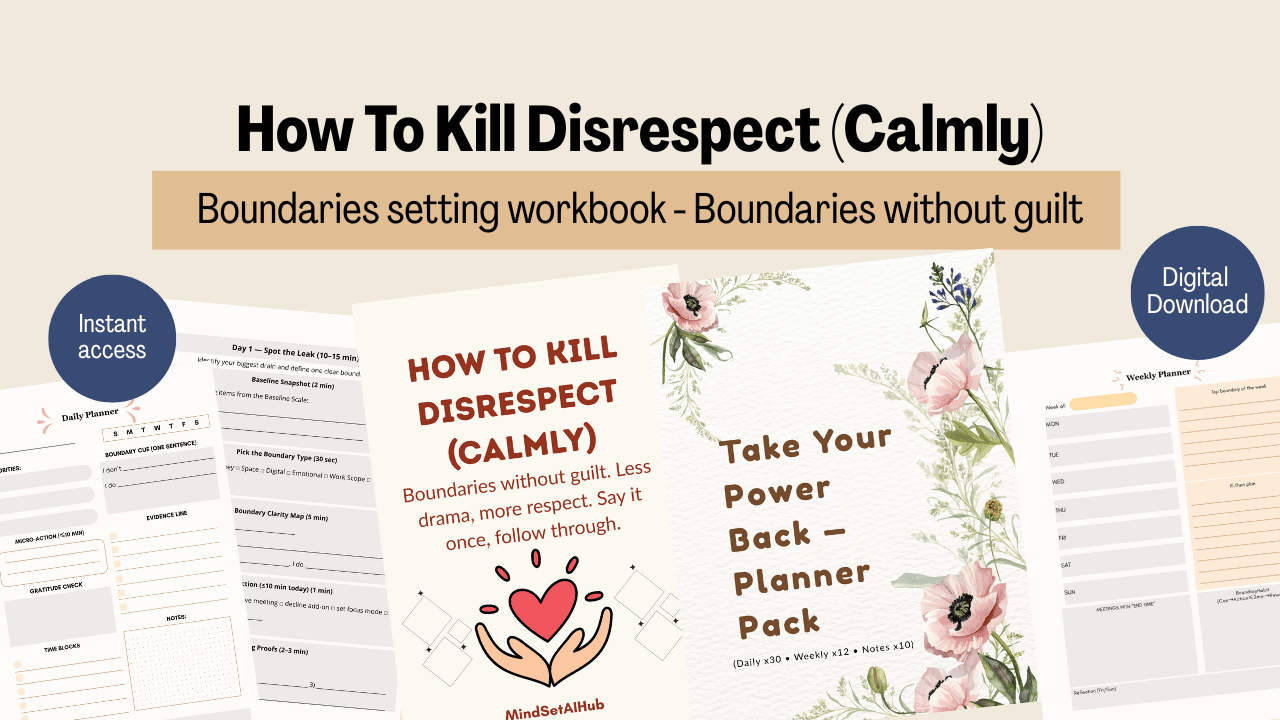
How to Start Taking Your Power Back (Without Drama)
Don’t try to fix all 12 signs at once. You’ll crash.
Use this simple Power Back Reset:
Notice
- Pick one area where you betray yourself the most:
- saying yes when you mean no,
- chasing,
- tolerating disrespect,
- over-explaining.
Interrupt the pattern
- Next time it appears, pause for 5 seconds and ask:
“If I respected myself fully, what would I do right now?”
Then do the smallest version of that:
- Send a shorter reply,
- Say “I can’t,”
- Don’t chase,
- End the call earlier.
Collect proof
- At the end of the day, write:
- “Where did I respect myself today?”
- “Where did I abandon myself?”
This is how you rebuild power: one self-respecting decision at a time.
Quick Reflection Prompts
Grab a notebook and answer these honestly:
- Which of the 12 signs shows up the most in your life right now?
- Who are you most afraid of disappointing — and what power have you given them over your choices?
- Where in your life do you feel the most resentment? (That’s where your boundaries are missing or being crossed.)
- If you acted like someone who deeply respects themselves for the next 7 days, what would change first?
Don’t just read these. Answer them. Awareness without action is just mental clutter.
Want to See Exactly Where You’re Losing Power?
If this stung, you don’t need more random motivation.
You need data on your self-respect.
That’s why I created the Self-Respect Snapshot – 10-Minute Power Back Scorecard (free).
Inside, you’ll:
- Rate yourself across boundaries, self-worth, people-pleasing, and emotional reactions
- See exactly where you’re solid vs. where you’re leaking power
- Get a simple next-step focus: “Start here first”
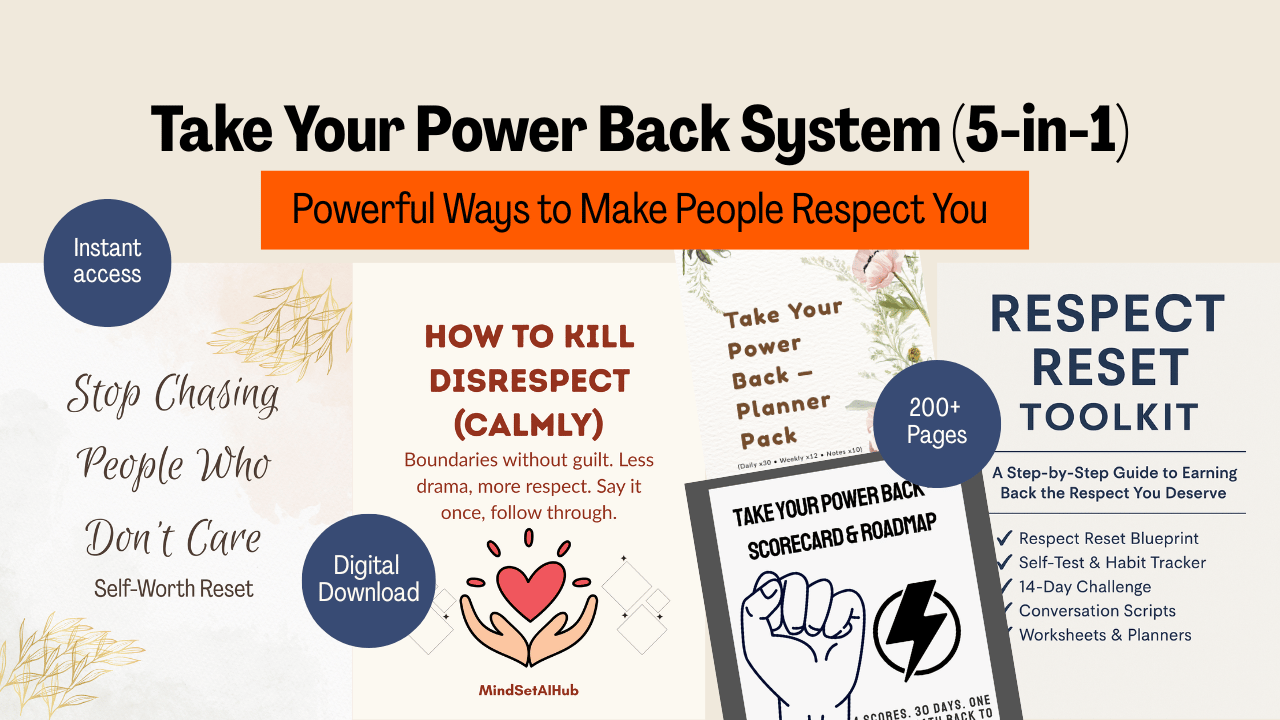
It’s the mini version of the full Take Your Power Back System.
Use the Snapshot to get your baseline.
If your score is low, good — it means you’re finally seeing the truth.
When You’re Ready for the Full Reset
The free scorecard gives you awareness.
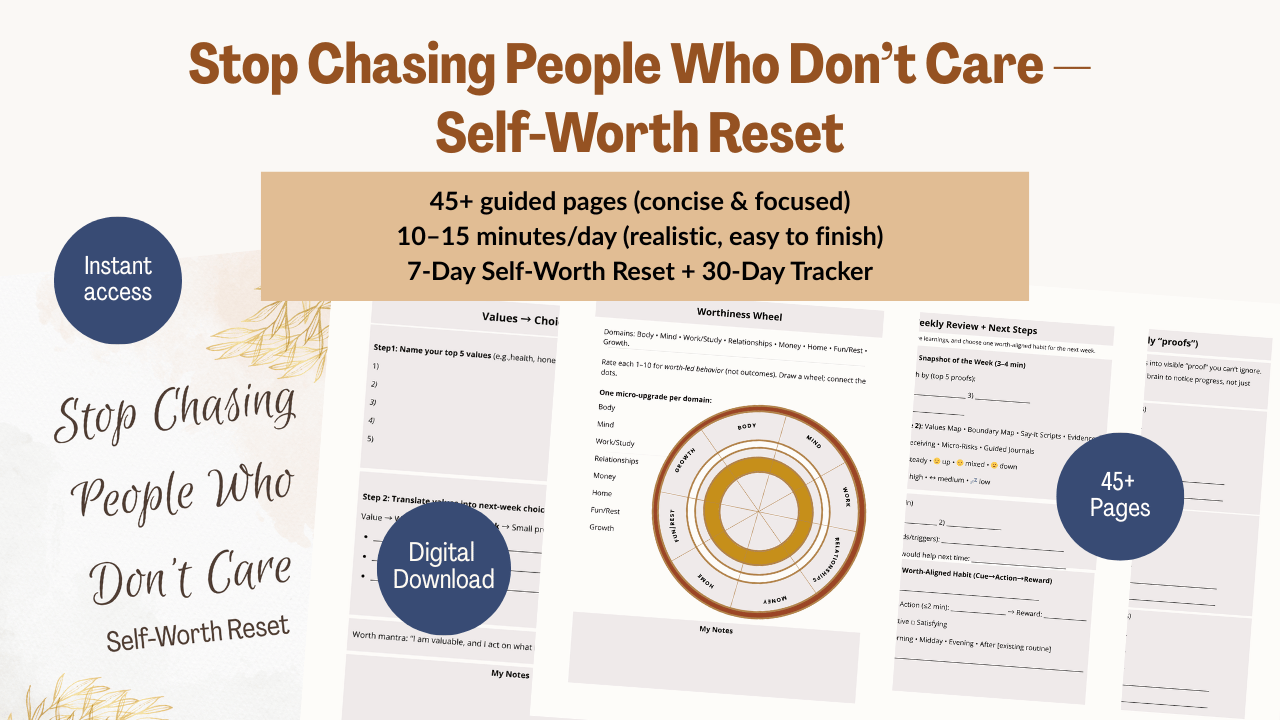
The Take Your Power Back System (5-in-1) is built to give you transformation.
So once you’ve done the Snapshot and you’re serious about change, your next step is simple:
- Use the full Self-Respect Scorecard & Roadmap to see your exact weak spots.
- Follow the Planner Pages to practice 10 minutes of “self-respecting actions” daily.
- Work through the Self-Worth Reset & Boundary Guides to stop chasing and start choosing.
- Use the Respect Reset tools & scripts to handle real-life conversations, pushback, and boundary tests.
You don’t fix self-disrespect by “hoping” people treat you better.
You fix it by becoming someone who never abandons themselves again — in texts, in conversations, in decisions, in daily habits.
One decision at a time, you take your power back.
Comments ()